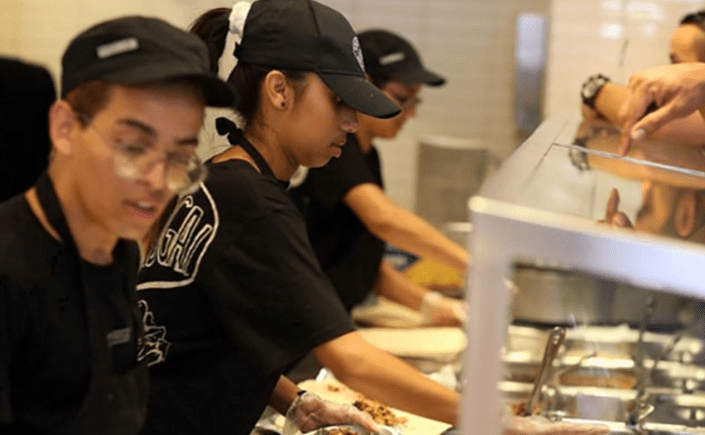
No-Tip Policies Never Felt Right

The ‘no tip’ policy failed for all the obvious reasons.

It’s about stake in the game and a sense of control.

For the employee, sweat equity has always been part of the restaurant game. A server’s share takes the form of providing outstanding service when they get higher check averages, higher tips and repeat business . Without tips, it becomes a management challenge to motivate, monitor and reward servers, who at their best, are independent personalities thinking like independent business reps. The energy and effort into managing them aren’t worth as much as the motivation of higher tips.

For customers, tips are their way of expressing on a sliding scale their satisfaction. Also, it’s a connection to the server, who, after all, is the one bringing you the food you’re about to consume (for better or worse.)

Was it worth trying, as an experiment? It’s always good to try things, I suppose. But I would contend that tips have long been part of the restaurant business for a reason. A quick inquiry into those reasons would have told just about anyone, it was not going to work as intended.

Here’s an article related to the subject from Restaurant Business.   http://bit.ly/2gl7huP


My Passion Shows

aaeaaqaaaaaaaaktaaaajdbknwexztjiltflodytndewzc1hntdmltlmzdhlmgrhoge3oq

Never underestimate the power of a trade show or networking event.  At least, I never will again after this year’s National Restaurant Association show in Chicago over the weekend.

To say the least, it was fantastic beyond expectations.

That’s probably because I had never treated the industry’s premier show quite the same way, and hence, didn’t truly know what to expect.

You see, working for the marketing agency through the years, I would approach this mammoth event in several ways.  As part of a client team, I’d check out  the competitors or look for trends or innovations I could possible connect to a growth strategy.  Or, as an agency executive, I’d be sniffing out new business possibilities.

With the clients, I’d be in for a “bond-a-thon” — treating them to the best clubs and fine dining restaurants of Chicago or arranging huge meal occasions (paid by media sponsors) for the client crews in town.  We’d look for adventure, and we’d somehow find it. The fun and hard work meshed well, I must say.

This time I had a different approach.  I made it my calling simply to reconnect with those who’s business and careers had been my life’s passion.  I just wanted to see them again, share a tale and press flesh, as friends do, because at some point they had been more than clients to me — they had been meaningful parts of my life.

The results were fantastic.

Turns out the network was bigger than I ever expected.  It’s a rather long list of people with an equally long list of associations.

Turns out the personal ties were deeper than I ever expected.  People remembered and relished things with me I had long forgotten.

And it turns out the opportunities just fell naturally out of things.  Most every person asked “what can I do for you?” without any need to.  Having been an account guy 4ever and a career builder by trade, it was a refreshing “what goes around comes around moment” for me.

There are lessons for us all in this.

For the young account service person, make a meaningful difference in the lives of your clients.  Approach each day with a passion for their interests and their success — and you’ll have an impact they will never forget.

Create memories with your clients wherever possible.  Obviously, that can include resume stuffers, such as “we launched a $50 million brand together.” But it should also include adventures and experiences that bond you uniquely forever, like catching a ride in a charter bus back from Vegas when the Bakery Show shut down because of the 9/11 attacks.

For executives everywhere, tend your network on a personal level.  Take the time to show your personal stories and your authentic appreciation of those business.  No doubt, if business is your life, then your business associates ultimately are your best friends.

Approach networking events and trade shows as THE places to reconnect.  Make THAT your priority for a show.  You’ll find it as rewarding personally as you will professionally.

Unintended Consequences for Restaurants, Employees?


When the Federal Government starts dictating compensation in private business, a flag goes up. Laws on wages are useful in establishing expectations and creating a sort of order in an economy that actually works, and labor laws at one time helped create a living wage and build a middle class that empower this nation.

But financial distortions can create the dreaded unintentional side effects. Let’s hope it’s not the case here, but the restaurant business for one probably isn’t too happy about this or any other tinkering into the wages and salaries it must pay.

For starters, the restaurant business is extremely competitive on all fronts. Restaurants compete for visitor traffic with each other, and that in and of itself is quite a bloody battle. But they also compete for the food dollar wherever it is spent. The American stomach — though quite large — is a share battle that’s equally bloody. As a result, it’s no small wonder that restaurants fail often and fight for every dollar of margin then can squeeze.

Anything that raises costs to a restaurant dents the value equation, plain and simple. At the risk of losing share-of-stomach to an alternative, the restaurant has to a) find new ways to deliver additional value or b) find ways to avoid the cost.

The best operators are already quite keen on avoiding costs. Look no further than the average chain’s procurement process and bidding wars to see how they’re doing. Or ask about their efforts to manage food waste or to build in sustainability practices to stay economically competitive.

With salaries and wages, the trend has been to avoid them. Them, of course, being people who earn and live off those salaries and wages. The push to raise the minimum wage to $15 may be helpful to those working these traditionally transient jobs in a restaurant. But the movement is now on a quickening pace for restaurants to install new technology to reduce the number of people taking orders and prepping foods.

Is this a bad thing? The opportunity is there for those who develop, build, install and maintain those systems. It’ll shift things slightly towards technology some would argue our restaurants have always needed and wanted. And it’s going to make restaurant’s more efficient than ever, and that’s a good thing.

But if this all translates into a barrier to entry for start-ups or a discouragement for investors, we all lose right along with the restaurant business. We need a robust and free restaurant business. We all benefit when the industry expands. Let’s not forget, the restaurant sector is the largest employer of people in the US, and any weights that slow it down weigh heaviest on the lowest rung or our economy.

And what if changing the salary requirement for paying overtime means that systems that are implemented reduce the overtime for people who were getting overtime pay anyway. Is it possible that the very middle class they are purporting to help will actually be hurt by this new rule?

In the restaurant business in particular, some would question the need for such a rule. Another competitive factor the sector faces is a competition for talent. The good ones are in high demand and movement in and around the industry is fluid. You don’t need a rule on compensation when you have a market that can deliver better compensation to those being abused financially if they are willing to make a move.

Others, obviously, differ — hence the new rule. Perhaps it is needed because those same aforementioned competitive conditions have done more to take it out on the employees than to give to them. Perhaps the restaurant business has trapped them and we need a rule to protect them. Perhaps its really not intended specifically for foodservice, but is to help people in other lines of business.

But upon reading the article, I saw the flags flying. I saw the politics, the lobbyist, the unions and the posturing and it didn’t feel right. I’m not one to judge or know the motives of those making these laws, and I’m all for the betterment of everyone. I just can’t help but wonder about economic distortions and unintended consequences that result from government policy.

Now, go out to a nice restaurant and discuss among yourselves.

http://wapo.st/1R8pty5

Chipotle: What’s the cure for food poisoning?

Chipotle has a brand problem. It made significant mistakes executing a core principle of any restaurant: Don’t make your customers sick.  The distress its customers suffered immediately bounced right back onto Chipotle — and down, down, down went its customer traffic, its income and its stock. That’s one ill brand.

With the sickening news and bad consequences, the executives had to do something, and they have set forth a “comeback plan.” They “revealed” it recently to the financial community, it all its splendor.

Here’s the Restaurant Business story: http://bit.ly/1Ok8X03

It just might work, not because it’s so great, but because Americans can move on. The same hectic social pace and demand for convenience that gave birth to fast casual restaurants such as Chipotle can help it through this mess. We are forgiving and forgetful. We are short-termers with short attention spans. If we’re hungry and have a hankering for a burrito and a Chiptole’s nearby, we’re there.

But that doesn’t really make the plan that great — because it isn’t. It strikes me as a bit of a “pat answer” to a crisis issue.  It’s what you’d expect from a corporation: They have acknowledged the error. They have vowed to solve it. They are going heavy on advertising to “reassure” the public the food is safe. They assure us our trust is valid and bait us with offers.

But does that befit Chipotle?  Has Chipotle ever been what it could have been — franchised assembly-line chain-restaurant food? Isn’t it about fresh, delicious and “healthy” foods matched to convenience and individual choice? Hasn’t its positioning been hip, anti-establishment and a wee sarcastic — which lends itself to a cool, sloppy mess of a righteous, right-on burrito?

What Chipotle really should have done was something hip, honest and transparent that tied back to its brand traditions and meaning. Without being flip or dismissive, they could have explained how their ingredients are sourced and handled, what risks that presented and how those risks played out, how they conducted themselves in discovering and addressing the problem, and exactly what are they going to do to make sure it doesn’t happen in the future — all in an visual, engaging and participatory way. Let’s see the executives and the workers, let’s hear their voices and see their faces and let’s visit the fields and the back-of-house where the food is handled.

This would have been more true, more authentic and hence more effective than what they did.  This would have reminded people that Chipotle’s heart has always been in the right place and its food and dining experience will remain fresh and for-you. This would have provided a human connection — which is what restaurants in general and Chipotle in particular provide beyond their food.  None of that changes — not the fine ingredients, not the interaction with the food prep people, not the wonderful burrito you love to eat — except one thing does change: attention to specific details that ensure customer safety.

But, instead, you get ads and a website with a corporate letter from cool rich guy Steve Ells.  It’s a lot of reading of a lot of words that have gone through a lot of editing by a lot of lawyers who make a lot of money off of cool rich guys.  It’s devoid of soul, emotion or connection, and makes you wonder if the same brand team that handles Volkswagen handles Chipotle.

Thinking, for sure, that transparency is important, Chipotle also posts a recap of the events and how they handled them.  Again, in the sterile, matter-of-fact approach of grey suited lawyers and PR writers that does not fit the brand.  It’s more of the soulless same, because “transparency” delivered as this is shows no soul.

The beauty here, though, is that things could work out just fine for Chipotle. Perhaps boring copy-heavy ads are the best way to sweep an issue aside. Perhaps showing more would create some legal crack for regulators or product liability lawyers to weasel through. Perhaps the Chipotle brand had enough intrinsic equity that people are willing to forgive and forget the bad news. Perhaps it doesn’t ultimately matter because people like Chipotle burritos, people get hungry and Chipotle’s quick and easy and hits the spot.

Perhaps the soul of this brand never mattered, after all.  That’d be my guess if I were asked what the people were thinking when they created this “comeback plan.”