

Chipotle has a brand problem. It made significant mistakes executing a core principle of any restaurant: Don’t make your customers sick. The distress its customers suffered immediately bounced right back onto Chipotle — and down, down, down went its customer traffic, its income and its stock. That’s one ill brand.
With the sickening news and bad consequences, the executives had to do something, and they have set forth a “comeback plan.” They “revealed” it recently to the financial community, it all its splendor.
Here’s the Restaurant Business story: http://bit.ly/1Ok8X03
It just might work, not because it’s so great, but because Americans can move on. The same hectic social pace and demand for convenience that gave birth to fast casual restaurants such as Chipotle can help it through this mess. We are forgiving and forgetful. We are short-termers with short attention spans. If we’re hungry and have a hankering for a burrito and a Chiptole’s nearby, we’re there.
But that doesn’t really make the plan that great — because it isn’t. It strikes me as a bit of a “pat answer” to a crisis issue. It’s what you’d expect from a corporation: They have acknowledged the error. They have vowed to solve it. They are going heavy on advertising to “reassure” the public the food is safe. They assure us our trust is valid and bait us with offers.
But does that befit Chipotle? Has Chipotle ever been what it could have been — franchised assembly-line chain-restaurant food? Isn’t it about fresh, delicious and “healthy” foods matched to convenience and individual choice? Hasn’t its positioning been hip, anti-establishment and a wee sarcastic — which lends itself to a cool, sloppy mess of a righteous, right-on burrito?
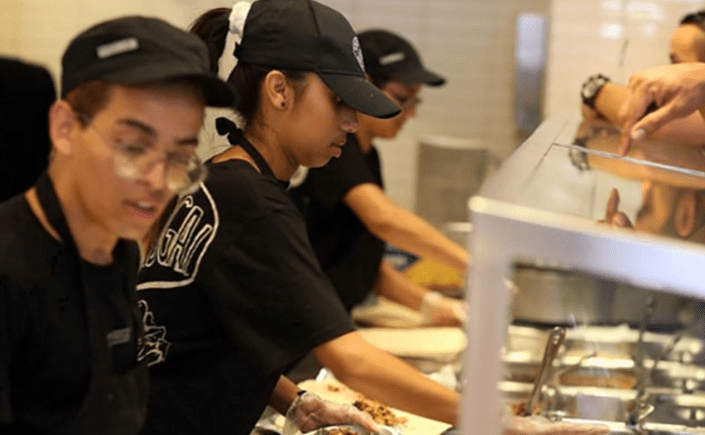
What Chipotle really should have done was something hip, honest and transparent that tied back to its brand traditions and meaning. Without being flip or dismissive, they could have explained how their ingredients are sourced and handled, what risks that presented and how those risks played out, how they conducted themselves in discovering and addressing the problem, and exactly what are they going to do to make sure it doesn’t happen in the future — all in an visual, engaging and participatory way. Let’s see the executives and the workers, let’s hear their voices and see their faces and let’s visit the fields and the back-of-house where the food is handled.
This would have been more true, more authentic and hence more effective than what they did. This would have reminded people that Chipotle’s heart has always been in the right place and its food and dining experience will remain fresh and for-you. This would have provided a human connection — which is what restaurants in general and Chipotle in particular provide beyond their food. None of that changes — not the fine ingredients, not the interaction with the food prep people, not the wonderful burrito you love to eat — except one thing does change: attention to specific details that ensure customer safety.
But, instead, you get ads and a website with a corporate letter from cool rich guy Steve Ells. It’s a lot of reading of a lot of words that have gone through a lot of editing by a lot of lawyers who make a lot of money off of cool rich guys. It’s devoid of soul, emotion or connection, and makes you wonder if the same brand team that handles Volkswagen handles Chipotle.
Thinking, for sure, that transparency is important, Chipotle also posts a recap of the events and how they handled them. Again, in the sterile, matter-of-fact approach of grey suited lawyers and PR writers that does not fit the brand. It’s more of the soulless same, because “transparency” delivered as this is shows no soul.
The beauty here, though, is that things could work out just fine for Chipotle. Perhaps boring copy-heavy ads are the best way to sweep an issue aside. Perhaps showing more would create some legal crack for regulators or product liability lawyers to weasel through. Perhaps the Chipotle brand had enough intrinsic equity that people are willing to forgive and forget the bad news. Perhaps it doesn’t ultimately matter because people like Chipotle burritos, people get hungry and Chipotle’s quick and easy and hits the spot.
Perhaps the soul of this brand never mattered, after all. That’d be my guess if I were asked what the people were thinking when they created this “comeback plan.”
 Zebell & Partners Market Development